A railroad’s compliance with federal safety regulations does not necessarily mean it provided a reasonably safe workplace. That distinction was central to a March 16, 2026, decision involving Norfolk Southern Railway Company and a Remote Control Operator (RCO) who suffered serious injuries while working alone in an Indiana railyard.
In Norfolk Southern Railway Company v. Scott Sporner, the Indiana Court of Appeals rejected the railroad’s argument that federal safety law prevented an injured worker from pursuing a Federal Employers’ Liability Act (FELA) negligence claim based on the use of a one-person RCO crew. The court concluded that federal railroad safety regulations do not automatically eliminate a railroad’s obligation to exercise reasonable care under FELA. On August 27, 2026, the Indiana Supreme Court declined to review the case, leaving the appellate ruling in place.
Although McEldrew Purtell did not represent the worker or participate in this litigation, the ruling raises important questions about railroad staffing, operating practices, and workplace safety.
For conductors, engineers, remote control operators, and other railroad employees, the decision reinforces an important point: complying with federal regulations does not necessarily resolve whether a railroad acted negligently.
What Happened in the Norfolk Southern Railyard?
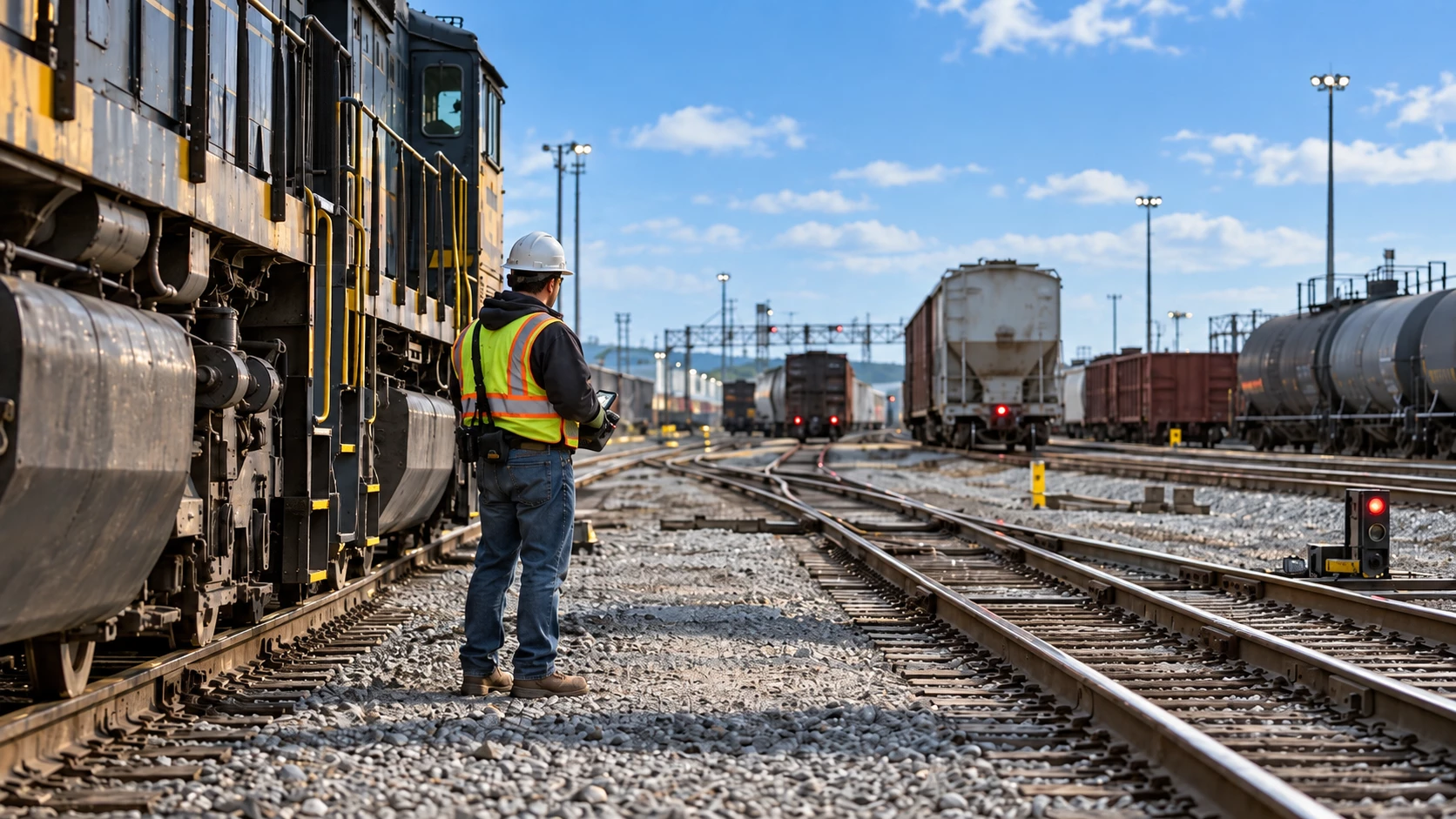
On January 4, 2021, Scott Sporner was working as an RCO at Norfolk Southern’s Elkhart, Indiana, railyard. He was operating as a one-person crew, controlling a train with a handheld remote control device.
According to the Indiana Court of Appeals’ decision, a yardmaster instructed Sporner to move his train east. However, the yardmaster did not realize another Norfolk Southern train was stationary farther east on the same track.
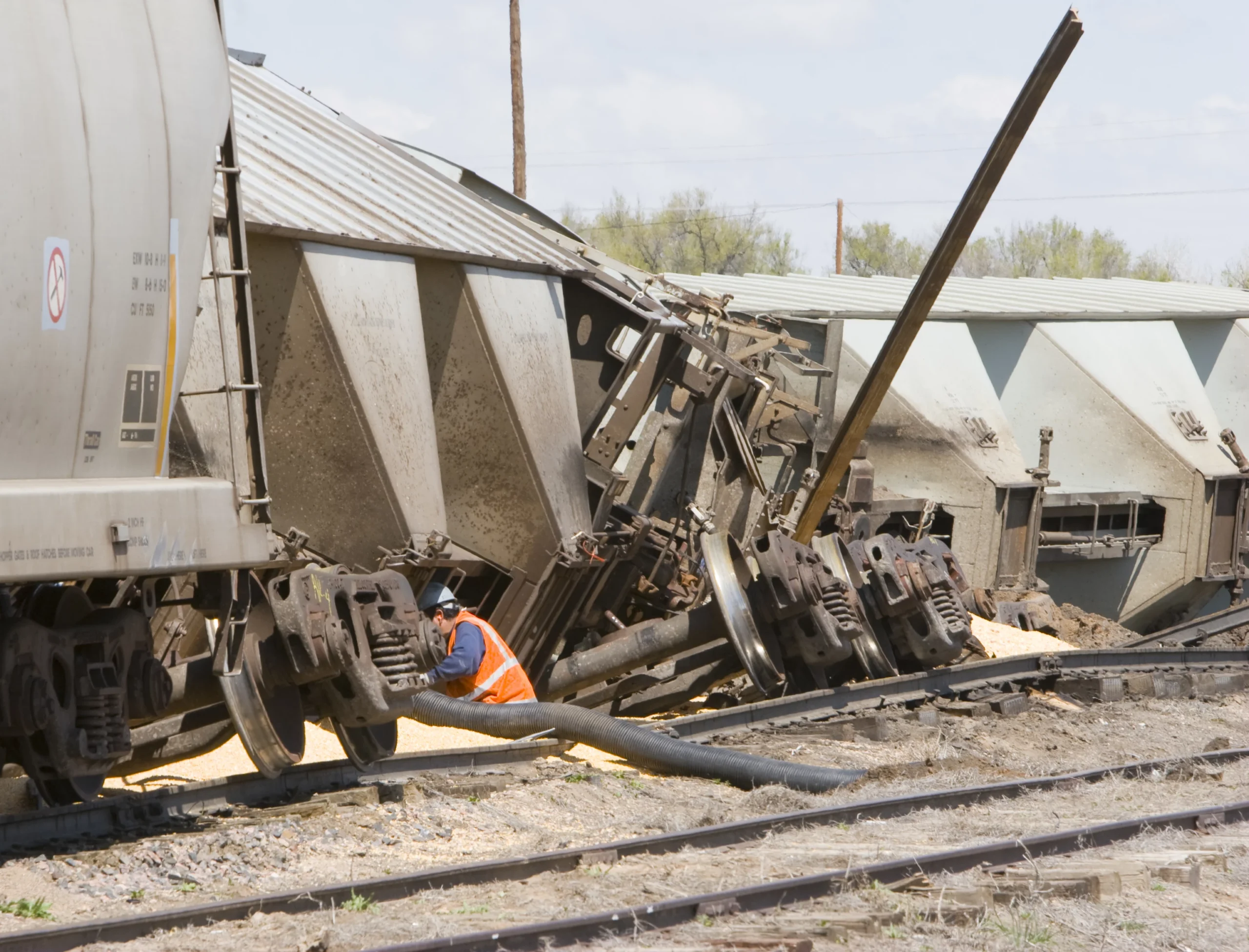
Sporner followed the instruction and began moving his train. At the time, he was positioned aboard the westernmost locomotive, away from the direction of travel. He was not positioned to maintain a lookout ahead of the movement. His train collided with the stationary train, seriously injuring him.
The court’s opinion describes injuries involving his head, shoulder, and hip, along with evidence of persistent neurological symptoms, balance problems, and tinnitus. Sporner subsequently pursued a FELA negligence claim against Norfolk Southern.
A jury found Norfolk Southern 60% responsible for the incident and Sporner 40% responsible. The jury assessed total damages of $8.2 million. After the comparative-fault reduction, the trial court entered a judgment of $4.92 million against Norfolk Southern. The Indiana Court of Appeals affirmed the judgment in March 2026.
This verdict resulted from litigation handled by attorneys unaffiliated with McEldrew Purtell. It is discussed here solely to explain the court’s decision and its potential significance for railroad workers. Case outcomes depend on the specific facts and evidence involved.
Norfolk Southern Argued Federal Law Permitted One-Person RCO Crews
One of Norfolk Southern’s central arguments concerned the relationship between FELA and the Federal Railroad Safety Act (FRSA). The railroad argued that because federal regulations permitted one-person remote-control operations, it could not be found negligent under FELA merely for assigning one employee to operate the equipment.
Essentially, Norfolk Southern maintained that compliance with federal crew-size regulations prevented the jury from considering whether additional crew members were necessary for safe operations. The railroad asked the courts to remove that theory of negligence from the case. The Indiana Court of Appeals rejected that argument.
The Court Ruled That Federal Safety Regulations Do Not Automatically Eliminate FELA Claims
The appellate court examined how the FRSA and FELA operate together. The FRSA establishes a national framework for regulating railroad safety. FELA, by contrast, allows qualifying railroad employees to pursue compensation when railroad negligence contributes to their injuries.
Norfolk Southern argued that the regulatory framework established under the FRSA should control the crew-size issue. The court disagreed. Relying on federal statutory interpretation principles and other decisions addressing the relationship between the two laws, the court concluded that the FRSA does not automatically prevent a worker from pursuing a negligence claim under FELA.
In particular, the court determined that the railroad’s compliance with federal law did not necessarily resolve the question of whether using a one-person RCO crew was negligent under the circumstances. The distinction is significant.
A federal regulation may permit a particular railroad operating practice without establishing that the practice is reasonably safe in every situation.
The court did not declare one-person RCO operations unlawful. Instead, it held that Norfolk Southern was not entitled to judgment as a matter of law simply because federal regulations permitted that staffing arrangement. The negligence claim could be considered based on the actual circumstances surrounding the incident.
Indiana Supreme Court Declines to Review the Decision
The case saw another important development on August 27, 2026, when the Indiana Supreme Court denied Norfolk Southern’s petition to transfer the appeal.
The decision leaves the Indiana Court of Appeals’ March 16, 2026 ruling in place, including its conclusion that federal railroad safety regulations do not automatically prevent an injured railroad worker from pursuing a FELA negligence claim involving one-person RCO operations.
The Indiana Supreme Court’s official transfer disposition report confirms that all justices concurred in denying transfer.
The denial does not mean the Indiana Supreme Court independently endorsed the appellate court’s reasoning or issued a new ruling on the merits. Rather, the published Court of Appeals decision remains in place.
What Do Federal Regulations Say About One-Person RCO Crews?
The Federal Railroad Administration (FRA) regulates numerous aspects of railroad operations, including crew-size requirements. Under 49 C.F.R. § 218.121, federal minimum crew-size requirements do not apply to train operations controlled by remote control operators.
The regulation also describes federal crew-size requirements as minimum standards and recognizes that railroads may establish more stringent operating requirements. That distinction is important.
A regulatory exemption does not necessarily answer whether a particular assignment, operating practice, or staffing decision was reasonably safe under the conditions involved.
In Sporner, the court allowed the worker’s FELA theory to proceed despite Norfolk Southern’s argument that federal regulations permitted a single-employee RCO crew. This does not mean railroads must use two-person RCO crews in every situation.
It means that federal regulatory compliance does not automatically defeat a FELA negligence claim involving crew size.
Why the Decision Matters for Railroad Workers
The ruling is particularly relevant to railroad employees involved in remote-control operations, switching movements, and other yard activities where staffing and visibility can affect workplace safety.
Railroads frequently rely on federal operating regulations and internal rules when defending their practices after an accident. Those requirements matter. However, a FELA negligence analysis may involve additional questions about whether the railroad acted reasonably under the circumstances.
For example:
- Did the staffing arrangement allow employees to perform the movement safely?
- Was the employee positioned where they could adequately observe the movement?
- Did the yardmaster or supervisor know whether the track ahead was occupied?
- Were appropriate communications and job briefings conducted?
- Did railroad supervisors recognize hazards associated with the assignment?
- Were additional personnel or other safety precautions reasonably necessary?
- Did the railroad’s own operating rules require additional precautions?
The answers depend on the specific facts of each incident.
For employees injured during yard, switching, and coupling operations, these issues may become important when determining whether railroad negligence contributed to an injury.
A Railroad’s Safety Responsibilities Extend Beyond Minimum Compliance
The decision also highlights a broader issue in railroad injury litigation. Railroads must comply with applicable federal safety requirements. But compliance with a particular rule does not necessarily establish that every aspect of an operation was reasonably safe. Under FELA, injured employees generally must establish that railroad negligence played some part in causing their injuries.
Evidence may involve staffing decisions, supervision, training, communication, operating procedures, equipment conditions, or known workplace hazards. The railroad’s compliance with applicable regulations can be relevant to that analysis, but it is not necessarily conclusive.
Understanding how FELA works is important because FELA is a negligence-based federal law, not a traditional workers’ compensation system.
The Court Also Upheld Evidence Supporting Future Lost Wages
Norfolk Southern challenged another aspect of the jury’s verdict: the evidence supporting Sporner’s future lost earnings. The railroad argued that the worker’s claim of being unable to return to competitive employment lacked sufficient evidentiary support. The appellate court disagreed.
The record included testimony from medical professionals, a vocational rehabilitation expert, and an economist concerning Sporner’s injuries, employment limitations, and projected future wage loss. The court concluded that the evidence was sufficient to support the jury’s consideration of future lost earnings. This portion of the decision reinforces the importance of documenting the long-term consequences of serious railroad injuries.
Depending on the circumstances, a FELA claim may involve more than immediate medical expenses or time missed from work. A worker’s permanent restrictions, lost earning capacity, ongoing medical needs, pain, and other consequences may be relevant to damages. These issues are especially significant when a railroad employee suffers a serious injury that affects their ability to return to their previous occupation.
Does This Ruling Mean One-Person RCO Crews Are Unsafe?
Not necessarily. The Indiana Court of Appeals did not establish a nationwide prohibition on one-person RCO operations. Nor did it determine that assigning a single employee to remote-control operations automatically constitutes negligence. Instead, the ruling addresses whether federal railroad safety law bars an injured worker from presenting a FELA negligence claim based on crew size. The court held that it does not.
This is an important distinction because railroad injury claims depend on the specific circumstances surrounding an accident. An operation may satisfy federal regulatory requirements while still raising questions about staffing, visibility, supervision, or other precautions that may have been reasonably necessary. Whether those circumstances establish negligence requires evidence and legal analysis.
The Sporner decision is a published Indiana appellate ruling, not a U.S. Supreme Court decision establishing a universally binding rule for every FELA case nationwide. Its reasoning may nevertheless be relevant to similar disputes.
What Should Railroad Workers Do After an RCO or Yard Injury?
When a serious injury occurs during remote-control operations or yard movements, the facts surrounding the assignment can be critical. Employees should seek appropriate medical treatment, report the incident accurately, and preserve any available information about the conditions that led to the injury.
Relevant evidence may include job briefings, crew assignments, radio communications, operating instructions, witness information, movement records, equipment data, and documentation of previous safety concerns.
Workers should also be careful not to assume that a railroad’s compliance with federal regulations means they have no potential FELA claim. The circumstances may warrant a closer examination of whether the railroad exercised reasonable care.
Following the appropriate steps after a railroad workplace injury can help protect important evidence and ensure workers better understand their options.
Injured During Remote-Control, Switching, or Yard Operations?
The 2026 Sporner decision reinforces an important principle: federal regulatory compliance does not necessarily eliminate a railroad’s responsibility to provide a reasonably safe workplace.
McEldrew Purtell represents injured railroad workers and their families in FELA matters involving unsafe operating practices, inadequate staffing, equipment failures, serious workplace injuries, and allegations of railroad negligence.
If you were seriously injured while working as an RCO or during switching or yard operations, our railroad injury attorneys can review the circumstances of your accident, explain your rights under FELA, and assess whether railroad negligence may have contributed to your injuries.
Contact McEldrew Purtell for a free, confidential consultation.