Responsive Menu
Add more content here...

Legal Insight: Defining the Ownership of Tracks in Philadelphia – Where Should I Look?

This article was created by the Philadelphia Trial Lawyers Association for The Verdict newsletter in conjunction with Cormick McLaughlin of McEldrew Purtell and is intended to provide legal insight into the ownership of railroad tracks in the Philadelphia area.

Finding out who owns the property where an injury occurred is an essential first step for an attorney. Ownership can inform who is responsible for maintaining that property and who can be held liable if they are negligent. In Philadelphia and its surrounding suburbs, the Southeastern Pennsylvania Transportation Authority (SEPTA) operates an extensive transportation network including regional rail services, trolley service, and subway service.

Despite SEPTA overseeing the scheduling and maintenance of the trains and trolleys themselves, the ownership of the tracks, surrounding areas, and the maintenance thereof can be a more complicated question. The purpose of this article is to examine who owns Philadelphia’s train and trolley tracks, who is responsible for the maintenance of those tracks and the surrounding areas, and to provide resources that can help you identify those parties.

SEPTA and Its Different Types of Tracks

To get an understanding of who is responsible for the maintenance and care of a section of track and its surrounding area, the first thing we must do is figure out what type of track or surrounding infrastructure our client’s case is concerned with. When it comes to SEPTA operating vehicles on a track in Philadelphia and its surrounding suburbs, there are three categories which for the purposes of this article we will refer to as Trolley Track, Subway Track, and Regional Rail Track.

Trolley Track

Trolley Track is used for streetcar service throughout the city. SEPTA has and continues to provide service on these fixed tracks that operate on the surface of city streets along with motor vehicle, bicycle, and pedestrian traffic. In Philadelphia, Trolley Track presents an interesting problem as there are significant portions where service has been completely abandoned, yet the track itself remains.

In a 1991 case that came to the Commonwealth Court of Pennsylvania for appellate review after arbitration, the Court gave a thorough explanation of who is responsible for the maintenance of Trolley Track and how that came to be. See Yackobovitz v. SEPTA, 139 Pa. Commw. 157, 590 A.2d 40 (1991).

This case began when the Plaintiff fell into a pothole located within eighteen inches of a SEPTA trolley rail on Allegheny Avenue which also happens to be “adopted” as a state highway. Id. at 162. As a result, plaintiff filed suit against both PennDot and SEPTA. PennDot and SEPTA joined the city of Philadelphia as an additional Defendant.

In Yackobovitz the parties stipulated that “the trolley track facilities on Allegheny Avenue where Marie Yackobovitz fell are subject to an Agreement and Lease entered into between SEPTA and the City on September 26, 1968 (Lease), and that this agreement and another agreement (Leaseback) the parties signed at the same time address the issue of “Leased Property” maintenance.” Id. at 162-63. The parties further stipulated that “the controlling legal issue was the determination of who was responsible for the maintenance of the trolley track area, including the trolley rails, the roadbed between the rails, and the roadbed within eighteen inches of the outermost rails on the day Marie Yackobovitz complained of her fall.” Id. at 163.

On review, the Yackobovitz Court stated “[I]t has been consistently held that unless altered by contract or ordinance, the entity operating a street railway is obligated to maintain and repair those portions of the streets on which its street railway tracks are located.” Id. at 164; see also Culver v. Lehigh Valley Transport Co., 322 Pa. 503, 507, 186 A.2d 70, 72 (1936). Historically a street railway company is required to maintain the “space between the rails and for eighteen inches on each side of them, in a safe and passable condition and repair as a duty or obligation incident to its operation of the . . . railway line . . .” Id. quoting Township of Horsham v. Public Service Commission, 97 Pa. Superior Ct. 366 (1929). Though this common law interpretation is of some use to those trying to figure out who is responsible for maintenance, in this case the issue became muddled through the contracting done between SEPTA and the City. Id. at 166-168. Ultimately, the court found through interpretation of the agreements between the City and SEPTA, that SEPTA was responsible for the maintenance of the street railway roadbed. Id. at 169.

This case serves to highlight a fact well known to Plaintiff’s attorneys. Who is responsible for maintenance may appear like a straightforward issue, but it is important not to let yourself be blinded by what is in front of you and ask the right questions during the investigation and discovery of a case to protect your client’s interests.

Subway Track

When we are thinking about Subway Track in Philadelphia, we may have to rethink the name. It is well known that Philadelphia has two major subway lines, the Broad Street Line and the Market-Frankford Line, recently redubbed “B” and “L” respectively. The difficulty with deeming them “subways” comes from the significant portions of the Market-Frankford or “L” which are elevated.

Without further digression we can look once again to the Commonwealth Court of Pennsylvania for a thorough examination of the ownership and maintenance responsibilities near subway track in Philadelphia. In Smith v. SEPTA, 707 A.2d 604 (Pa. Commw. Ct. 1998), both the City and SEPTA were appealing the trial court’s denial of their respective post-trial motions. The jury found both SEPTA and the City liable for injuries suffered on the sidewalk outside of a Broad Street Line Station, importantly SEPTA had previously done maintenance work on this sidewalk. In its opinion the court examined the bounds of SEPTA’s maintenance responsibility and provides other facts that can help us understand where responsibility for maintenance around SEPTA Subway Track begins and ends.

The Court once again referred to the leasing agreement between the City and SEPTA mentioned in Yackobovitz, supra. The trial court provided the jury with limited portions of the lease agreement between the City and SEPTA, including section 1.12 (requiring SEPTA to maintain the Leased Properties in good and safe operating condition), section 2.01(requiring the City to build Broad Street subway extensions), and section 2.04 (requiring SEPTA to maintain the extensions in first-class physical condition, normal wear and tear excepted.) Smith v. SEPTA at 607. The Smith Court found that the jury was entitled to interpret the lease between SEPTA and the City as assigning SEPTA the responsibility to maintain the sidewalk outside of the Broad Street Line Station. Leading up to this finding the Court mentions other portions of the lease which required the parties to make an inventory of “paid areas for which the operator of the transit system is responsible and free areas for which the City is responsible.” Id. at 608.

This interpretation of the agreements between SEPTA and the City provides Plaintiff’s attorneys with important information on the expansive maintenance responsibilities which SEPTA may have for maintaining the areas around Subway Track. SEPTA’s responsibility can, under the right circumstances, go beyond the stairways leading to their subway stops and the platforms on which people wait for their ride and include the sidewalks leading up to those stairwells or underground entrances. In other words, even if it seems like property that would fall under the City’s maintenance responsibilities, it may be worth the time to include SEPTA if they have a nearby facility.

Regional Rail Track

SEPTA’s Regional Rail is the most expansive of the operations being discussed in this article. The Regional Rail Track covers ground in Philadelphia County, Montgomery County, Delaware County, Bucks County, New Jersey, and Delaware. With the scale of operation, it should be no surprise that who owns the track and is responsible for the maintenance surrounding it is a more complicated question than the prior two sections of this article.

After SEPTA’s establishment they gradually acquired direct ownership of many rail assets from private railroad companies such as The Pennsylvania Railroad and The Reading Railroad. We will not focus on the portions of track that are under SEPTA’s direct ownership as they are the majority. Instead, it is important to know that there are locations on SEPTA’s lines where they are using infrastructure from other private entities such as AMTRAK. In situations where AMTRAK owns the track, such as on SEPTA’s Trenton Line, Paoli/Thorndale Line, and Wilmington/Newark Line, SEPTA leases the track rights or operates through cooperative agreements.

With its large scale and the intricacies of the various agreements SEPTA’s Regional Rail maintains with other rail services providers and governments it is important that Plaintiff’s attorneys make sound discovery requests to examine who is responsible for ownership and maintenance at any given portion of track, station, or parking lot associated with SEPTA’s Regional Rail. Unfortunately, there is no one size fits all when it comes to injuries occurring at or near SEPTA’s Regional Rail. You will need to discover the agreements and dig in to find out who is responsible for the conditions that caused injury to your client.

Where to Look?

The maps SEPTA provides on its website are a valuable resource when a client first calls to inform you that they have been injured at or near a SEPTA station. Once you can establish a location you can rule out some of the intricacies noted above. If the injury occurred near, at, or on Subway or Trolley Tracks you know that the majority of the work will be investigating the current agreements between SEPTA and the municipality. Most likely that municipality will be the City of Philadelphia.

When it comes to regional rail, as noted above, things may get more complex. This is when you may have to dig into federal railroad legislation, the Pennsylvania Public Utility Code, and any shared use agreements governed by the Surface Transportation Board. It may also be necessary to discover documents such as SEPTA’s annual reports along with any contracts or lease agreements which are relevant to the issues in your case.

Armed with the fact that ownership and maintenance of the various tracks that provide transportation throughout the City of Philadelphia and its surrounding suburbs isn’t always a straightforward question, you can confidently ask the right questions and look in the right places during discovery. Doing this will ensure that your client’s rights are protected, and responsible parties are held accountable.

$700,000 FELA Settlement

Colin Haviland and Daniel Purtell settled a FELA case for $700,000 on behalf of a client who suffered severe injuries as a result of his Railroad employer failing to supply the proper equipment to complete his job.

McEldrew Purtell’s client was directed to manually lift an excavator bucket weighing more than 300 pounds, despite his employer’s rule that employees should not lift anything over 55 pounds without the assistance of a machine. Our firm is proud of our work on our client’s behalf because we secured the money he needed to get him back on his feet and provide his family with the financial security they deserve.

$885,000 FELA Settlement

Attorney John Coyle settled a FELA case for $885,000 for a union railroad worker, John Felder, who suffered serious injuries on the job while loading railroad ties.

Mr. Felder and a coworker were tasked with moving railroad ties onto a flatbed truck without the assistance of any appropriate equipment when the tie slipped out of the coworker’s hand, resulting in a serious injury to our client. McEldrew Purtell is proud to represent members of the railroad community to ensure safety and accountability and to secure the outcome they deserve.

$1.6 Million Verdict Against SEPTA

McEldrew Purtell attorney, John Coyle, supported by Associate Attorney, Cormick McLaughlin, secures a $1.6 million verdict in the Philadelphia Court of Common Pleas on a no offer case on behalf of SEPTA conductor, Donnell Shuler in an FELA & Railroad case.

Mr. Shuler, who worked for SEPTA for 30 years, sustained a life-changing electric shock on the job and was out of work for almost a year. Both parties agreed his net wage losses were $110,000. SEPTA denied responsibility for Mr. Shuler’s injuries despite being aware of electric shocks at SEPTA stations since 2013, 5 years before Mr. Shuler was injured. 

Everything You Should Know About FELA Claims

As a hardworking railroad employee, you enjoy many exciting career opportunities but are also exposed to alarming risks. It’s common to suffer minor scrapes, but railroad workers are also vulnerable to broken bones, concussions, or even severe burns. 

Given these risks, it’s important to be fully prepared for the real possibility of suffering a workplace injury. Research highlighted by the National Safety Council (NSC) revealed that railroad employees suffered 3,216 workplace injuries in 2021. That year, 11 railroad workers tragically died on the job. 

Federal Employers’ Liability Act (FELA) claims address the inherent risks of railroad work by providing a targeted approach to obtaining compensation for employees. The process for securing damages can seem complex, but it offers a compelling opportunity to recover damages beyond what might be available under conventional workers’ compensation. 

If you understand how this process works and what you stand to gain, you could leverage this opportunity to maximize your damages. Keep reading to learn why it’s so important to get a skilled FELA claims attorney in your corner. 

What Is a FELA Claim?

The Federal Employers’ Liability Act provides an alternative avenue for railroad workers to seek relief after suffering on-the-job injuries. The legislation became necessary more than a century ago, when the proliferation of railroads led to a shocking number of employee deaths and injuries. 

Drawing on examples of states that had successfully implemented legislation to protect railroad workers, the U.S. Congress passed the act to overcome many of the limitations posed by workers’ comp — which, at the time, was generally the only option employees had to collect damages. 

FELA claims should not be confused with workers’ compensation. Both solutions do provide compensation opportunities for employees who have been injured on the job. That being said, FELA was purposefully enacted to exempt railroad professionals from state-based workers’ comp rules. 

FELA applies a fault-based approach, whereas workers’ comp removes fault from the equation to prevent workers from filing personal injury lawsuits against their employers. Under FELA, however, injured employees can file lawsuits, so long as they can prove some degree of fault on the employer’s part. 

How FELA Claims Work

FELA is not centered on employers’ insurance companies; rather, it involves filing lawsuits at the state or federal level. These claims bypass the limits on damages typically applied in workers’ comp cases, so they largely mirror personal injury lawsuits in this regard. 

Coverage

At first glance, FELA coverage seems simple: If you’re a railroad worker and suffer an injury on the job, you should be entitled to damages. In reality, however, much of the conflict in FELA cases stems from the definitions of who exactly qualifies as “employed” and whether they were actually injured in the line of work. 

What’s more, FELA applies only to common carriers engaged in interstate commerce. Although the burden of proof is significantly lower than in personal injury claims, it’s still necessary to demonstrate some degree of negligence.

Thankfully, the FELA definition of “agent” is extensive enough to cover those classified as independent contractors. Still, most defendants will argue that claimants are ineligible. 

Some have claimed that if the injured worker was not actually on the clock at the time of the injury, they are not eligible for compensation. Often, these questions are settled on a case-by-case basis, reinforcing the need for strong legal representation. 

FELA Claims Benefits

Depending on the nature of your injuries and the quality of your legal representation, you could secure extensive benefits upon filing a FELA claim. These typically fall under a few main categories: 

  • Medical expenses: Health care bills can add up quickly after a railroad injury. From hospital visits to medications and even long-term physical therapy, these bills can be covered if your FELA claim is successfully resolved. This category accounts for both the medical bills incurred at the time of the claim and additional health care costs anticipated in the future. 
  • Lost wages: Many railroad injuries are severe enough to prevent employees from returning to work immediately. These lost wages can be especially alarming when medical bills begin to pile up. Compensation for lost wages should limit the financial suffering that can occur if you’re unable to work. If your railroad injury results in a long-term disability, this category may also include lost future earnings. 
  • Pain and suffering: All types of railroad injuries can lead to significant emotional distress. In some cases, this becomes severe enough to lead to diagnoses of depression, anxiety, or post-traumatic stress disorder. Even if mental concerns don’t reach the level of being diagnosable, you deserve damages in recognition of your physical and emotional suffering. This is where non-economic damages such as pain and suffering come into play. 

FELA Claims Process

If you’ve been injured on the job and are ready to proceed with the FELA claims process, it’s crucial to contact a knowledgeable attorney who can provide valuable legal advice. As we’ve discussed, this representative will help you demonstrate your eligibility while also clearing hurdles such as the burden of proof. 

Once you’ve contacted an attorney, the process will largely resemble that of a personal injury lawsuit. Both your attorney and your employer will conduct thorough investigations into the incident, followed by discussions of a settlement. The claim must be filed within the three-year statute of limitations.

While some cases are settled quickly, it’s possible that your attorney will move forward with filing and serving a complaint. The defendant must respond within a predetermined period. The discovery process follows, encompassing the exchange of relevant documents, written questions known as interrogatories, and perhaps even depositions under oath. 

Sometimes, mediation is pursued in hopes of resolving the case before it goes to trial. Otherwise, attorneys for both sides will have the opportunity to present the facts of the case to a jury or judge. 

It Could Be Time to Hire a FELA Claims Lawyer

A skilled FELA claims lawyer could make a world of difference as you seek damages. Don’t suffer in silence; work with a FELA attorney to get the compensation you deserve. To learn more about this process and what experiences FELA attorneys can do for you, get in touch today. 

Elements of a Train Accident Lawsuit

Train accidents can lead to devastating injuries. This catastrophic harm can lead to high medical bills, financial struggles, and severe pain. These accidents are often the result of negligence. You could be owed substantial compensation for your injuries if that is the case.

If you were recently involved in a train crash, you could have a case for a train accident lawsuit. Your attorney can help you prove the elements of your claim and help you seek the compensation you deserve.

What Is a Train Accident Lawsuit?

A train accident lawsuit is like other legal claims that seek monetary compensation from a negligent party. This usually occurs when train passengers sue the train company or other negligent party for their injuries. Their careless actions or inactions may make them legally liable to the injured parties.

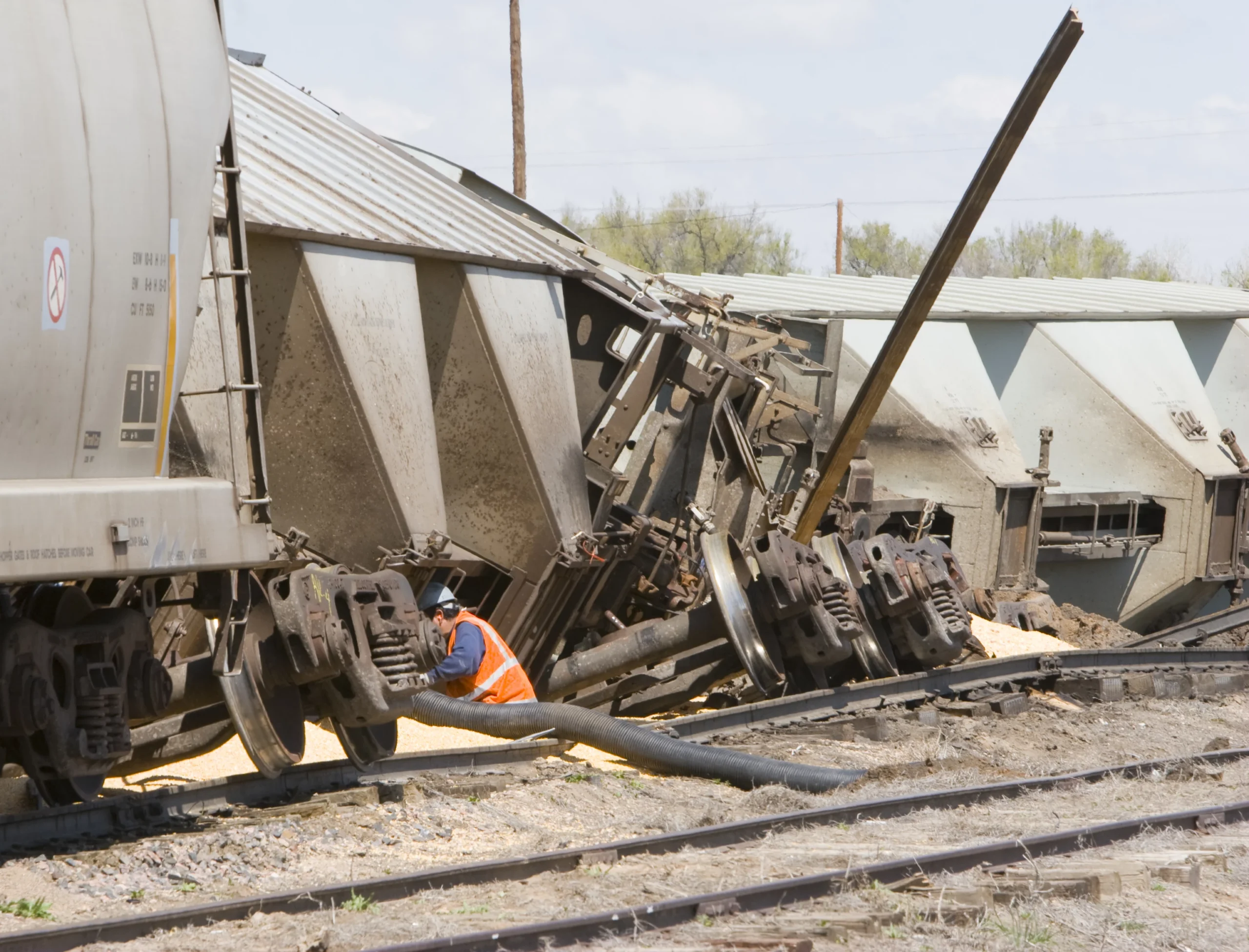
High-speed trains, commuter trains, and much more may be involved in a railroad accident. Train cars may derail, high-speed trains can crash, and an accident at a railroad crossing could cause severe injuries.

What Makes Up a Train Accident Lawsuit?

There are many parts to a train accident lawsuit. Every case is different, and its unique facts may change how the case should be handled. This could even mean different legal causes of action depending on the type of accident, how it occurred, or the injuries involved.

Injury or Death Due to Train Collisions

A train crash is likely to cause very serious injuries or even death. Serious and catastrophic injuries are not only painful, but they also require serious medical intervention. Injuries from a train accident may include, but are not limited to:

  • Broken bones
  • Traumatic brain injury
  • Severe burns
  • Lacerations and cuts
  • Loss of limb or amputation
  • Paralysis and spinal cord injuries

The other possibility is that a person dies in a train accident. When this happens, a wrongful death lawsuit is likely appropriate. This is a lawsuit by the surviving family members for compensation related to the death of their loved one.

Negligence: Negligent Design or Operator Errors

Negligence occurs when a party breaches a reasonable duty of care to protect others. Train companies and other parties have a duty of care towards train passengers to help keep them safe.

One common problem is negligent design of the train, its parts, or even the track. When a company designs a defective or dangerous product on the train, it can cause severe injuries and even a train accident. The designer and manufacturer of that defective part may be responsible for the harm they caused.

Other train accidents are caused by operator errors. The train operator is expected to know how to safely operate and manage the train. When they are negligent, you may be able to hold the train operator responsible for your injuries.

Damages and Monetary Compensation

A train accident lawsuit seeks compensation for injured passengers and their family members. Monetary compensation may include:

  • Past and future medical costs
  • Costs of rehabilitation
  • Property damages
  • Lost income and earning capacity
  • Pain and suffering
  • Loss of consortium
  • Wrongful death damages

This monetary compensation can help you and your family move forward after a devastating train accident. Train accident victims deserve quality representation in their case.

Common Causes of Train Accidents

Determining the cause of the train accident is a key part of proving the legal claim. A qualified train accident attorney knows how to investigate the case and determine what caused it.

Dangerous Conditions

Many trains are poorly maintained and left in a dangerous condition. Train companies often fail to properly fix problems they know exist or follow standard maintenance schedules. This can lead to faulty trains that may derail, causing severe harm.

Dangerous conditions can also include:

  • Slip and fall hazards on the train
  • Exposed electrical wiring
  • Cracked train tracks
  • Lack of lights on the train, so other vehicles can’t see it

Inadequate Training

Train operators and other staff need proper training. A train is a dangerous piece of equipment. It is massively heavy and can cause severe harm. When train operators get insufficient training, they may not know how to avoid common problems or keep their passengers safe. This can lead to devastating, even deadly, accidents.

It is the train company’s job to adequately train its operators and employees. Its failure to do so could make it financially liable to you or others who were harmed in the train accident.

Driver and Pedestrian Negligence

One of the most common causes of train accidents is negligence by a driver or a pedestrian. Drivers try to outrun a train, causing a severe accident. Others leave a vehicle on the track and cause an accident that way.

Other accidents are caused by pedestrians who stay on the track even when a train is coming. The sudden stop to avoid the pedestrian can lead to passenger injuries or worse.

Traveling Too Quickly

Train operators are supposed to know how fast to travel in certain zones. Many purposely or negligently travel too fast and can cause serious injuries. This can lead to a train derailment or a crash into a train station.

Defective Tracks or Obstructions

Other train accidents are due to defective or broken tracks. Defective tracks may be caused by poor design or faulty materials. They may also be due to negligent maintenance and care of the tracks.

Train companies are also supposed to be aware of possible obstructions. Their negligence in clearing tracks may mean they owe you substantial compensation for your injuries.

Do You Need a Train Accident Lawyer?

You need train accident lawyers who know how to handle these complex cases. Train accidents are often caused by a train company’s negligence. The train company will fight hard and deploy high-powered legal teams to avoid liability.

If you were injured in a train accident, let a qualified attorney from McEldrew Purtell help you fight for the compensation you deserve. We also help small firms and individual attorneys with referral services for complex cases such as train accidents. Let us know how we can help. Contact us today. 

Jim McEldrew Discussing Amtrak Derailment on Fox News

Gretchen Carlson of Fox News interviewed Jim McEldrew this afternoon on her television show. Jim has been representing injured individuals in railroad litigation for more than thirty years and formerly served as the President of the Academy of Rail Labor Attorneys. They discussed the implications of the foreign object and the potential for the railroad engineer to be confused as to his geographical position on the tracks.

Earlier today, Jim was also interviewed on Knowledge@Wharton, a daily call-in business interview program hosted by Dan Loney on SiriusXM channel 111.  On the air with Dr. Allan Zarembski, a Research Professor and Director of Railroad Engineering and Safety Program at the University of Delaware, Department of Civil and Environmental Engineering, they discussed the Amtrak derailment, Congressional funding and railroad safety.

Jim McEldrew on Positive Train Control in the Philadelphia Inquirer

McEldrew Purtell Partner and Railroad Attorney James J. McEldrew, III had his commentary on Positive Train Control published on the Philadelphia Inquirer website today.  The article discusses the need for the automated system mandated by Congress in 2008 to be implemented by Amtrak and other railroads to prevent accidents like the one last night. It’s titled “U.S. railroad’s must adopt ‘train control’ now.”